In fact, smokers are estimated to be 25 times much more in danger from radon than non-smokers. Radon is the most important source of lung cancer cells after smoking. It is approximated that radon creates in between 3-- 14% of all lung cancers in a country, depending upon the average radon level as well as the smoking cigarettes occurrence in a nation. Federal agencies, such as the Nuclear Regulatory Commission (NRC) as well as the Occupational Safety And Security and Health And Wellness Administration (OSHA) set limitations on exposure to radon (and radon progeny) in the office.
Is it hard to sell a house with radon?
Fortunately, it's not hard to sell a house with radon, provided that you alert potential buyers and mitigate the problem, say Brian Thomas, a top real estate agent in the Denver, Colorado area, with 16 years of experience. “For as much fear and uncertainty as radon causes, there's an easy fix.”
No matter your area designation or geographical place, all homes must be checked for radon. Your radon test results may be reported in either picocuries per liter of air (pCi/L) or working degrees (WL). For those personal wells/well water, it is recommended that you check your water for radon. See the Maryland Department of the Setting for a listing of qualified water screening labs. Radon is an unnoticeable, contaminated gas created throughout the natural failure of uranium in dirts as well as rocks.
Does Radon make you tired?
The more uranium there is, the more radon there is. That makes radon the second leading cause of lung cancer after smoking. But even minor symptoms like headaches, feeling unusually tired, itching or burning eyes, irritated skin, nasal congestion, a dry throat or nausea could be due to your home's indoor air quality.
OURRADON DETECTORS
It is a supposed "inert" gas, which indicates that the aspect radon does not conveniently respond with various other compounds. When the radon rots, it releases ionising radiation containing alpha bits. The EPA, HUD and AARST worked together to establish demands for radon screening and mitigation in multifamily real estate.
What do you do if your house has radon?
Radon can seep into any home that is in contact with the ground. It is undetectable unless you perform a radon test. It is the second leading cause of lung cancer and according to the EPA and CDC, it kills more than 20,000 annually. It is not something you want in the home you are buying.
Effective and straightforward strategies exist to reduce the concentration of radon in drinking-water materials by aeration or utilizing granular triggered carbon filters. Radon goes into houses with cracks in the floors or at floor-wall junctions, voids around wires or pipes, How much does radon mitigation cost? little pores in hollow-block wall surfaces, or sumps or drains. Radon degrees are generally higher in basements, cellars or living rooms touching soil. Radon is much more likely to trigger lung cancer in individuals that smoke.
How much does it cost to run a radon fan?
Known risk factors for lung cancer include: Risk by age: About two out of three lung cancers are diagnosed in people over age 65, and most people are older than 45. The average age at diagnosis is 71. Family history: Genetics may predispose certain people to lung cancer.
Some remains below the surface and also dissolves in water that streams as well as gathers under the ground's surface area. According to Health and wellness Canada, radon is connected to about 16% of all lung cancer deaths in Canada.
& Goodarzi, A. A. The repair of eco appropriate DNA double hair breaks brought on by high straight energy transfer irradiation-- no simple job. A total of 11,727 radon tests were returned and also qualified for analysis, standing for the aggregation of multiple-year screening initiatives by Evict Radon, the Lung Associations and also Saskatchewan Health And Wellness Authority.
If a short-term follow-up test is done as well as the outcome is 4 pCi/L or greater, radon reduction is recommended. If the standard of the first as well as follow-up temporary tests is much less than 4 pCi/L, consider testing once again at some point in the future. A long-term examination offers a reading radon mitigation system that is most likely to show the structure's year-round average radon level than a short-term examination. As a result of season variations in radon degrees, the closer the lasting measurement is to 365 days, the much more representative it will certainly be of yearly ordinary radon degrees.
A small blower, often no more than 15 cubic feet per min (0.7 l/s) may then draw out the radon-laden air from these tooth cavities and also tire it to the out of doors. With well-sealed HVAC ducts, really little adverse stress, maybe just 0.5 pascal (0.00007 psi), will stop the entrance of extremely radon-laden wall surface tooth cavity air from entering into the breathing area. Checking for radon airborne is accomplished utilizing passive or energetic tools placed in the structure. Some gadgets are quickly sent to a research laboratory for analysis, others determine the results on-site. Radon-in-water testing requires a water sample being sent to a lab.
Who pays for radon mitigation buyer or seller?
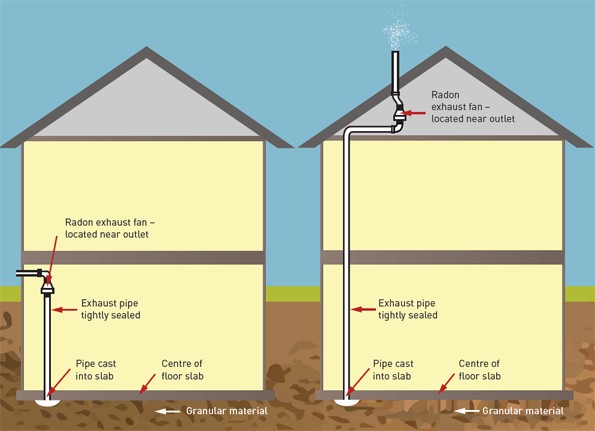
There's no single method that fits all radon removal system needs. Common techniques include: Sub-slab depressurization, where suction pipes are inserted through the floor or concrete slab into the concrete slab below the home. A radon vent fan then draws out the radon gas and releases it into the air outside.
World Health and wellness Company's International Radon Job.
Keep in mind to evaluate for radon every 2-5 years or anytime you remodel your home, make changes to your home heating and cooling systems or set up a radon mitigation system. Doing this at the time of building and construction is much more affordable as well as can make your residence more power effective. You might likewise wish to consider putting a radon contingency stipulation in your purchase deal. This can secure you versus unexpected expenses related to reduction if radon is located.
Should I buy a house with high radon?
EPA RECOMMENDS: If you are buying or selling a home, have it tested for radon. For a new home, ask if radon-resistant construction features were used and if the home has been tested. Fix the home if the radon level is 4 picocuries per liter (pCi/L) or higher.
- The only means to recognize if the levels in your house are more than what is taken into consideration "secure" is to examination.
- This set off a nationwide panic-- homeowners feared their home could have similarly high degrees.
- EPA's Indoor Environments Division gives a Web site regarding interior air top quality concerns, consisting of radon, asthma, and also ecological cigarette smoke/secondhand smoke.
- If you get water from a public water system, learn whether the comes from a surface (storage tank, river, or lake) or a ground water (underground) resource.
- Homes that are beside each other can have various indoor radon degrees, making a neighbor's test result a bad forecaster of radon danger.
- You may be being subjected to high degree of radon under the incorrect pretense that you are secure because you have a mitigation system if you don't execute regular follow-up testing.
Does seller have to fix radon?
It's very likely that your future buyer will make you fix the radon problem before they will purchase the home. It's good to just take care of it during your real estate deal. Sometimes the seller pays for it all, sometimes they fund a credit and sometimes there is a split.
Can you smell radon?
The “safe” level of radon exposure is no radon at all. The EPA's recommended level for radon mitigation is 4.0 pCi/L or above. It's estimated that 1 in 15 American homes have an elevated level of radon gas.
Where is Radon most commonly found?
There's no single method that fits all radon removal system needs. Common techniques include: Sub-slab depressurization, where suction pipes are inserted through the floor or concrete slab into the concrete slab below the home. A radon vent fan then draws out the radon gas and releases it into the air outside.
What causes radon?
Being exposed to radon for a long period of time can lead to lung cancer. https://www.mylubbocktv.com/story/42117911/what-are-the-symptoms-of-radon-poisoning Radon gas in the air breaks down into tiny radioactive elements (radon progeny) that can lodge in the lining of the lungs, where they can give off radiation. This radiation can damage lung cells and eventually lead to lung cancer.
Why is radon bad for you?
Radon produces a radioactive dust in the air we breathe. The dust is trapped in our airways and emits radiation that damages the inside of our lungs. This damage, like the damage caused by smoking, increases our risk of lung cancer.
Is radon heavier than air?
Radon gas is approximately 7.5 times heavier than air. It is however a noble gas with no chemical affinity but is easily influenced by air movements and pressure. In a house with forced air heating and cooling, radon gas can easily be distributed throughout the entire dwelling.
Who is most at risk of lung cancer?
The more uranium there is, the more radon there is. That makes radon the second leading cause of lung cancer after smoking. But even minor symptoms like headaches, feeling unusually tired, itching or burning eyes, irritated skin, nasal congestion, a dry throat or nausea could be due to your home's indoor air quality.
What is involved in radon mitigation?
Mitigation of radon in the air is accomplished through ventilation, either collected below a concrete floor slab or a membrane on the ground, or by increasing the air changes per hour in the building. Treatment systems using aeration or activated charcoal are available to remove radon from domestic water supplies.
Where is radon found in the home?
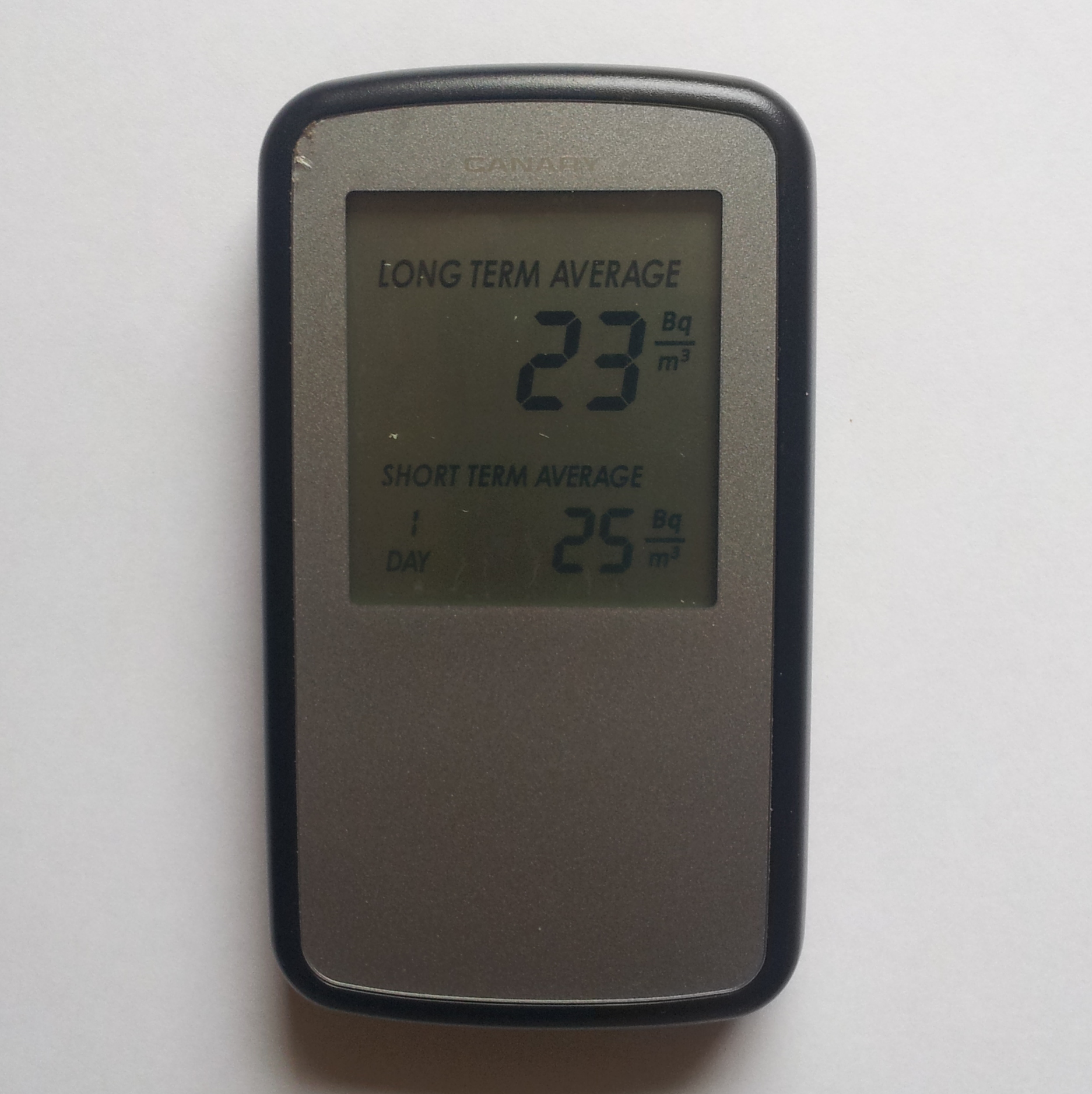
Radon is a radioactive gas that has been found in homes all over the United States. It comes from the natural breakdown of uranium in soil, rock, and water and gets into the air you breathe. Radon typically moves up through the ground to the air above and into your home through cracks and other holes in the foundation.
How common is radon in a home?
It's common: About 1 in every 15 homes has what's considered an elevated radon level. The gas is odorless and invisible, says the EPA, and it causes no immediate symptoms, so the only way to know if your home is affected is by testing your individual residence.
What are the signs of radon poisoning?
There are no safe radon levels. Any exposure to the gas, no matter how small, can cause damage to the DNA in your lung, the lower the levels found in your home, the lower the risk you have of developing lung cancer.
Can radon cause headaches?
Radon gas is odorless, colorless, tasteless and radioactive. Radon gas seeps into the home through radon entry points in the foundation. Because you can't smell radon gas, the only way to know if you have it in your home, office or school is to test for it.